Healthcare
websites

Healthcare website design that turns patient searches into booked consultations

Patient-focused websites for UK private consultants and clinics. Built to UK GDPR and WCAG 2.2 AA, fast, and designed around the journey from first search to booked consultation.

The problem

Where private practices lose patients

Not one big failure. Four small ones, at the four points a patient can quietly go elsewhere.

  1. Searching

    They search a condition or a procedure, not your name.

    If the site has no page for what they typed, they never reach you — they reach whoever wrote one.

  2. Judging

    They decide in seconds whether this looks like a serious practice.

    A slow, dated or stock-photo site erodes the clinical credibility you spent years building.

  3. Checking

    They look for your credentials, your fees and what happens at the appointment.

    If fees are hidden they assume the worst, and either ring to ask or quietly leave.

  4. Enquiring

    They send an enquiry, or they do not.

    A long form, an unclear next step, or no reassurance about their data, and the enquiry does not happen.

Proof

A practice we did this for

Private Ophthalmology

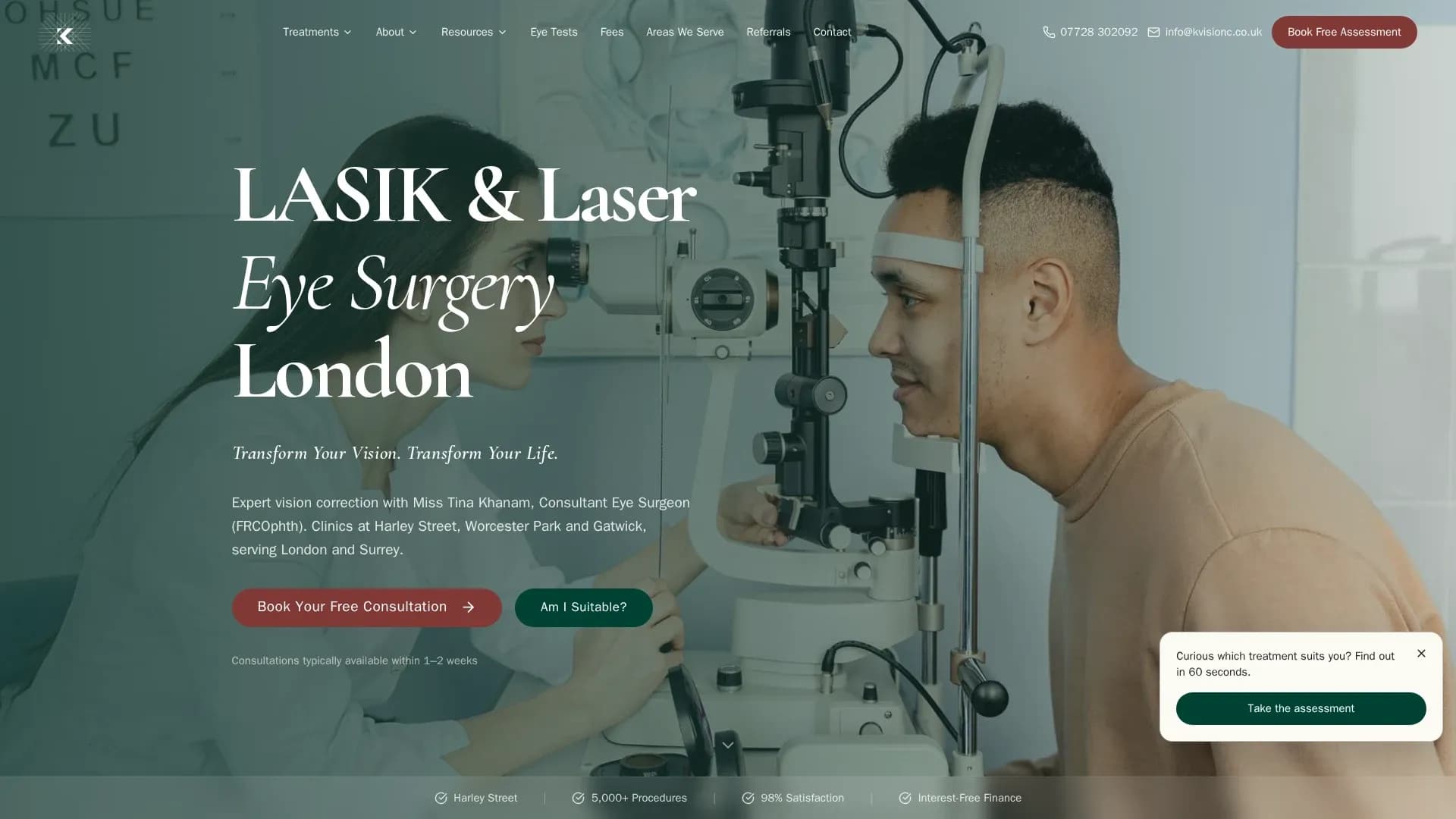
Miss Tina Khanam

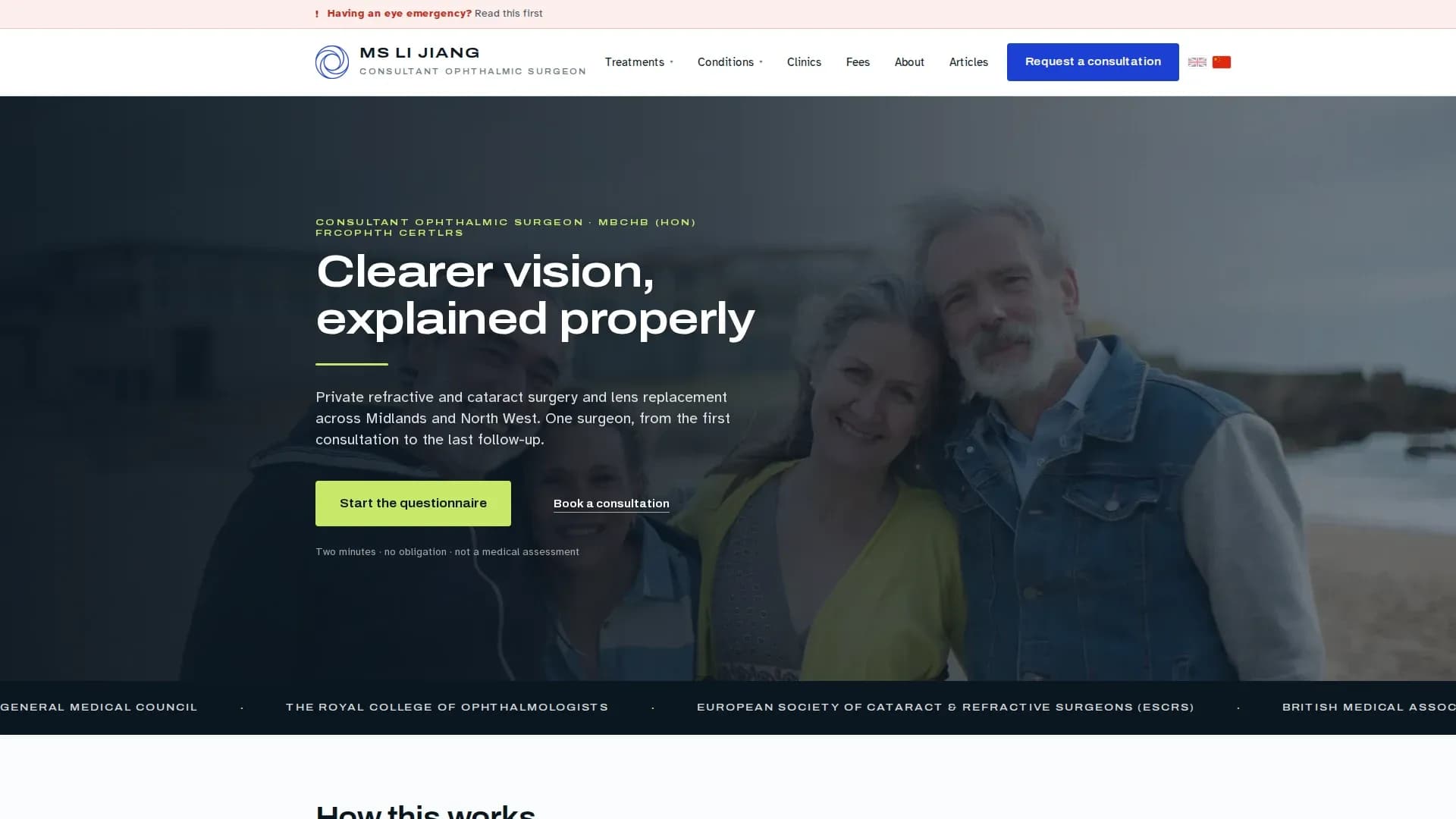
Patients researching eye surgery compare clinics for weeks and ask the same seven questions about every procedure — cost, suitability, risks, recovery, lenses, reviews, and the ones they are embarrassed to ask aloud. The previous site answered them unevenly and showed none of Miss Khanam’s record, so a visitor could not tell a Moorfields-trained examiner from anyone else with a Harley Street address.

16

Treatments detailed

Source: Live site, captured August 2026

Read the full case study

“AETHUS understood the unique challenges of marketing a medical practice. Our new site looks professional, loads instantly, and has doubled our online enquiries.”
Consultant Ophthalmologist — private practice, Bedfordshire

What you get

What our healthcare website design includes

The outcome is the reason. The technique underneath it is how we get there.

Patients find you for what they actually searched
A page per condition and procedure, written for patients rather than for colleagues, with the local search foundations behind it.
The practice reads as credible in the first few seconds
Clinical tone, real photography, named clinicians with their registrations, and a site that loads before they lose patience.
Nobody has to ring to find out what it costs
Published fees or honest ranges, with what is and is not included stated next to them.
Enquiring feels safe and takes a moment
Short forms, privacy-by-design handling, a clear statement of what happens next, and a reply path that does not depend on one inbox.
You can see what is working
Measurement configured before launch against a baseline we agree with you, so the change is visible rather than asserted.

Investment

What it costs

Three engagements, named for the situation you are in. Every figure excludes VAT.

From £5,000

4–6 weeks

Launching private practice

£8,000–£12,000

6–10 weeks

Replacing a site that under-performs

From £15,000

Scoped per practice

Growing a clinic

Full terms — payments, ownership, content and ongoing care

Duties

What we do about compliance

No certification badges. The specific things we implement, which you are welcome to check.

  • Privacy-by-design enquiry forms, with data minimisation and a documented retention period.
  • Processor and sub-processor mapping, so you know where patient data goes.
  • Consent configuration matching current ICO guidance on cookies and similar technologies.
  • WCAG 2.2 AA, tested with a keyboard and a screen reader — the standard behind the Equality Act duty to make reasonable adjustments.
  • CQC rating display implemented where that duty applies to you.
  • Clinical and cosmetic copy written to be factual and checkable, in line with GMC and CAP guidance.

Source: This describes our implementation practice. It is not legal advice, and your practice should take its own on its regulatory obligations.

The discipline

Why healthcare website design is different

A clinic's website carries duties a shop's never has to. Three of them shape everything we build.

Patient data is different data

An enquiry to a clinic is not a contact-form submission; it is health information, volunteered by someone who may not have told anyone else. UK GDPR treats it as special category data, and the build treats it the same way: forms that collect the minimum, a documented retention period, and a mapped list of every processor it touches. Your practice manager can answer "where does patient data go?" from one page, because that page is written during the build rather than after an incident.

Accessibility is a legal duty with a clinical purpose

The patients most likely to need you — older, in pain, low-sighted, anxious — are the patients a carelessly built site quietly excludes. We build to WCAG 2.2 AA and test with a keyboard and a screen reader, the standard behind the Equality Act duty to make reasonable adjustments. It is also plain good marketing: a site that works for a patient with a tremor works faster and reads clearer for everyone else.

Trust is built with evidence, not adjectives

A patient weighing up a private clinic checks the same things a regulator would: who the clinicians are, which register they are on, what the treatment involves, what it costs. So the site presents named clinicians with their registrations, displays your CQC rating where the duty applies, publishes honest fees, and makes no claim that cannot survive being checked against GMC and CAP guidance. The restraint reads as confidence, because it is.

Questions

Frequently asked questions

How much does a healthcare website cost?

Launching a private practice starts from £5,000. Rebuilding a site that under-performs runs £8,000–£12,000. Multi-practitioner clinic platforms start from £15,000. Every figure excludes VAT, and the full commercial terms — payment, ownership, content — are published on the pricing page.

How long does a healthcare website take to build?

Four to six weeks for a new practice site; six to ten weeks for a full patient-journey rebuild. Clinic platforms are scoped per practice. We would rather give you a real date than a flattering one.

Is the website GDPR compliant and CQC aligned?

Yes. Privacy-by-design enquiry forms, a documented retention period, consent configured to current ICO guidance, and CQC rating display where the duty applies to you. Claims and imagery are written to be defensible under GMC and CAP guidance.

Can you integrate our booking or practice-management system?

Yes — we integrate the booking and practice-management systems private clinics already use, so patients can self-book and reception does less manual scheduling. Where systems have to talk to each other, consent and data retention are mapped across them.

Will the site help us rank for our treatments?

That is the point of the build. A page per condition and procedure, written for patients rather than for colleagues, with local search foundations and your Google Business Profile behind it — so you appear for the specialty and "near me" searches your future patients actually run.

Do you provide ongoing support after launch?

Yes. Care plans from £150 per month cover hosting, security, updates, backups and monitoring. They are optional and not required to keep the site running — you own the site outright on final payment.

Next step

Find out where your enquiries are going

A short review of your current site against the four points above. No obligation, and you keep the written summary whether or not we work together.

Not ready to talk

Run the Private Practice Website Scorecard instead — it scores your site against CQC display duties, UK GDPR, accessibility and advertising rules, and shows the result on screen.

Rated 5.0 on Google

Trusted by growing UK businesses and clinics

  • Universally Bedford
  • Bricking It
  • CranberryHome
  • K Vision Centre
  • Menassa Vision
  • Panthagani