Jesse Panthagani
Ophthalmologist website that tripled Google clicks in 4 months
3x
more Google search clicks in 4 months
- Up 204%
- Nov 2025 to Mar 2026
Source: Google Search Console, organic clicks per month. See the trend
A consultant cataract surgeon’s private practice, East Midlands.
Results
3x more Google search clicks in 4 months
Up 204%, Nov 2025 to Mar 2026. Patients book online and use the site's tools before they call.
- People arriving from Google
- Appearances in Google results
Use the left and right arrow keys to step through the months. Monthly counts are not shown.
Source: Google Search Console, organic clicks per month. The shaded band is Nov 2025 to Mar 2026; growth compares its first and last month. Monthly counts are kept private for our client.
Your practice next
Want growth like this for your practice?
Send us your practice website. We will look at how patients find you today and reply within one working day with an honest view of what would move the needle: no obligation, no hard sell.
- Built by the team behind all three ophthalmology case studies
- Website design, medical SEO and marketing under one roof
- Fixed-price quote before any work starts
Get a free review of your practice website
Tell us where to send it. We reply within one working day.
What we did
Website design, medical SEO and marketing
We designed and built the private ophthalmologist website for Mr Jesse Panthagani, a consultant cataract surgeon in the East Midlands, and ran the medical SEO and marketing behind it. The site lets patients qualify themselves before they call: six self-assessment tools, a cataract and lens cost calculator, published prices and a 104-piece article library written around the searches patients actually make.
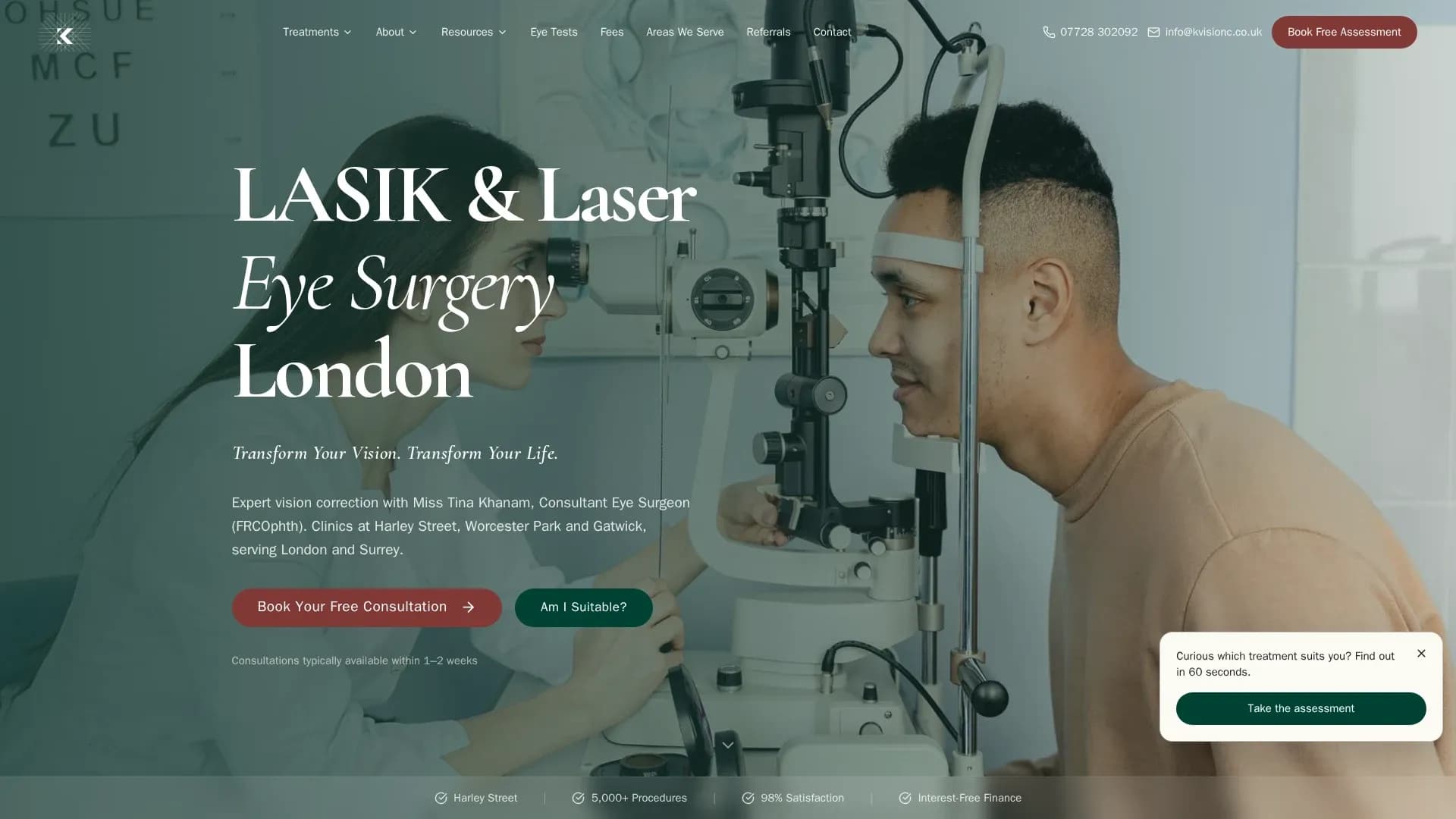
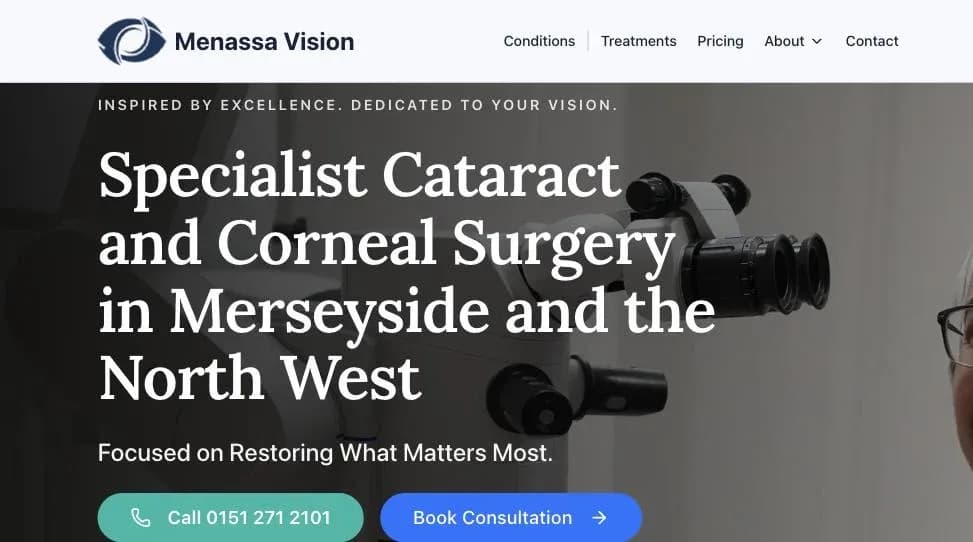
Google search clicks tripled in four months, up 204% from November 2025 to March 2026. See how we approach ophthalmology website design and ophthalmology SEO, or compare the K Vision Centre and Menassa Vision case studies.
- Client
- Mr Jesse Panthagani
- Industry
- healthcare
- Challenge
- Private eye surgery is decided once, by someone who has spent weeks not knowing whether they are even a candidate. The previous site described the procedures and then asked for a phone call, which put the least informed person in the room in charge of the first move — and showed nothing of a surgeon who leads a cataract service and teaches the trainees behind him.
- Key Results
- 3x more Google search clicks, Nov 2025 to Mar 2026
Mr Jesse Panthagani is a consultant ophthalmologist and Cataract Surgery Lead at North West Anglia NHS Foundation Trust, practising privately across the East Midlands. Aethus rebuilt his practice site around patient self-qualification: six self-assessment tools, a ten-to-thirty-year cost calculator, published prices, and a 104-piece article library, with a free video consultation as the opening step.
The Challenge
Private eye surgery is decided once, by someone who has spent weeks not knowing whether they are even a candidate. The previous site described the procedures and then asked for a phone call, which put the least informed person in the room in charge of the first move — and showed nothing of a surgeon who leads a cataract service and teaches the trainees behind him.
Our Solution
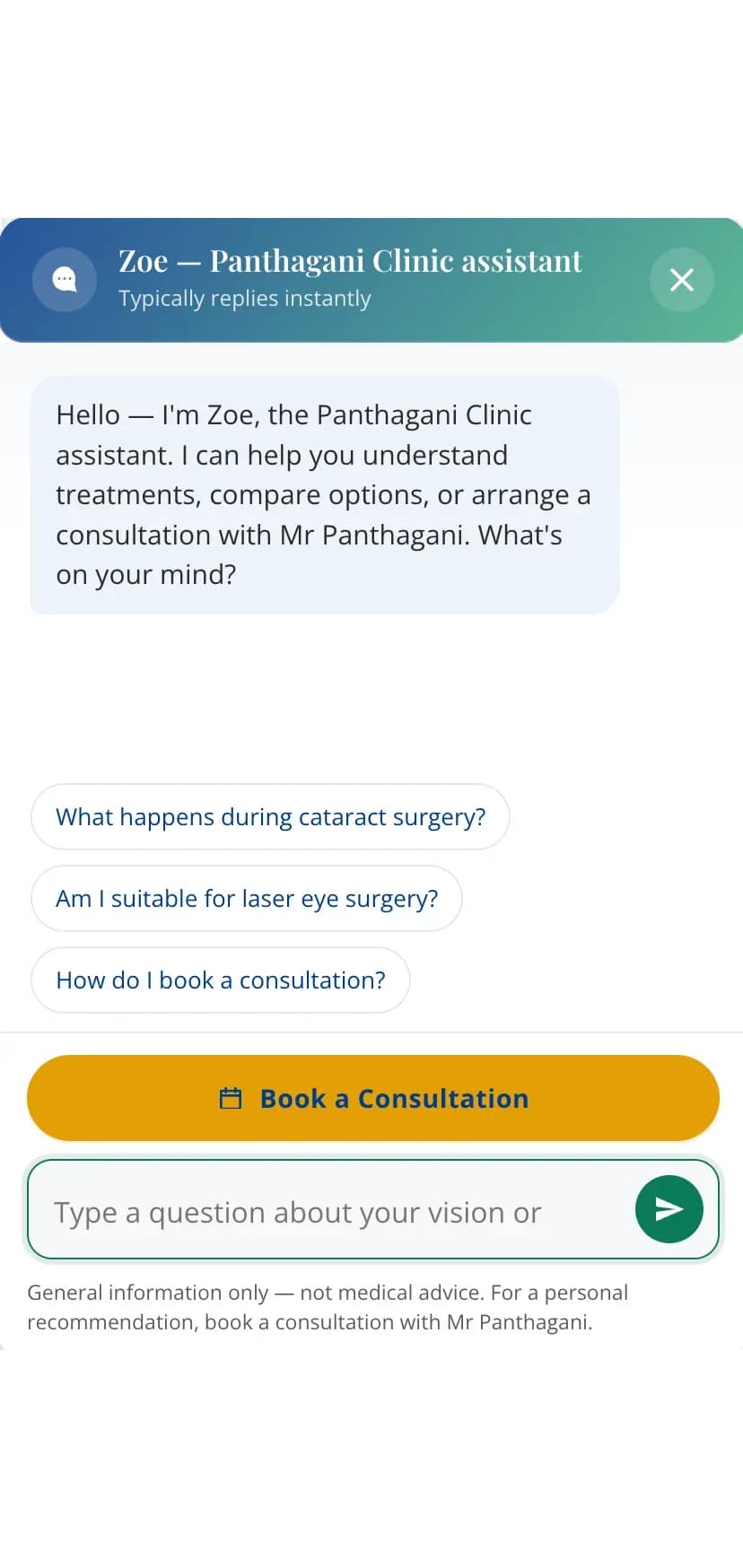
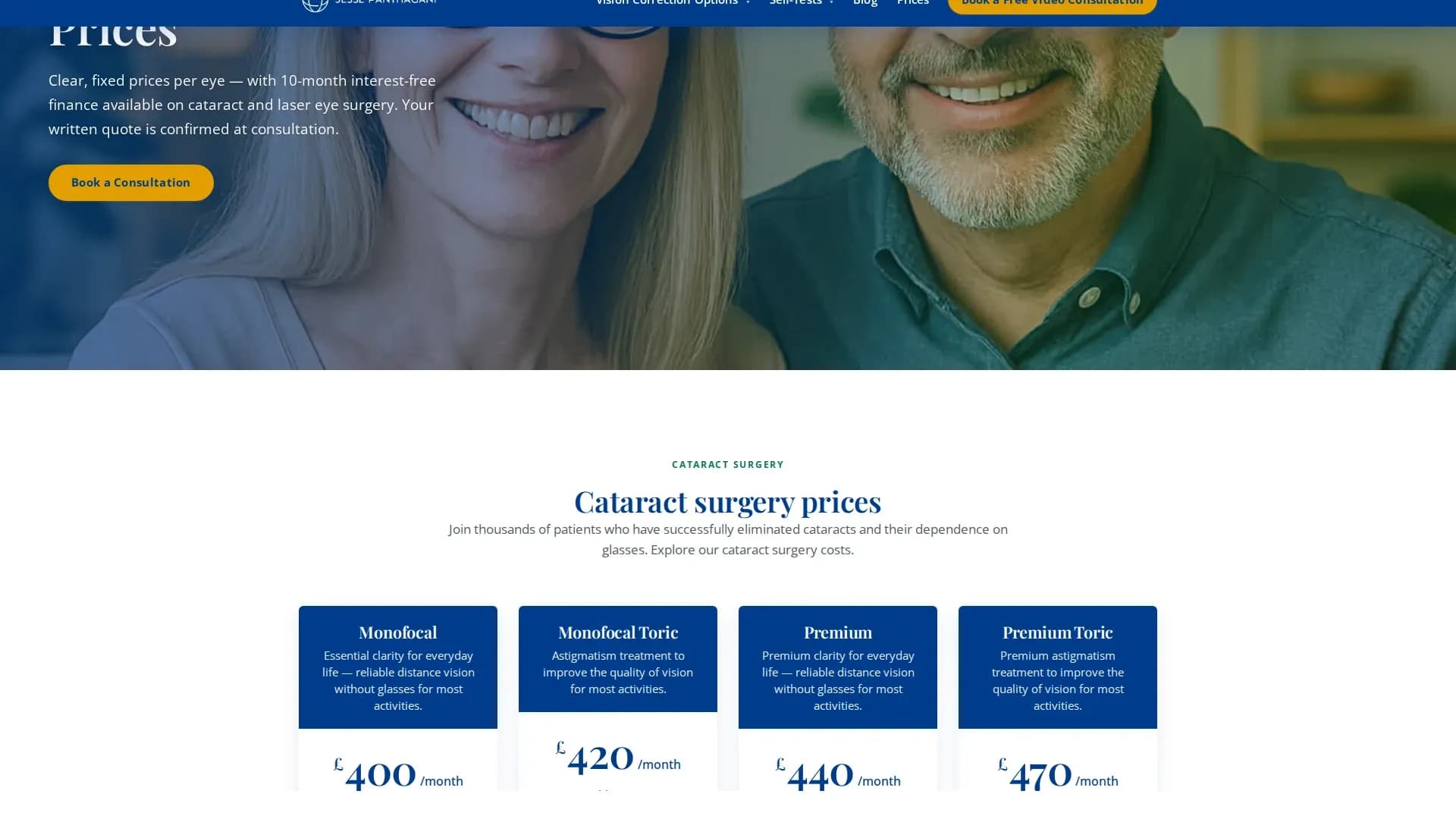
A practice site built around qualifying the patient first. Six self-assessment tools establish suitability, timing, lens preference and what recovery involves; a cost calculator does the arithmetic against decades of glasses and contacts; prices are published; and every condition hands off to the treatment that resolves it. The first step is a free video consultation, not a booked appointment.
The brief
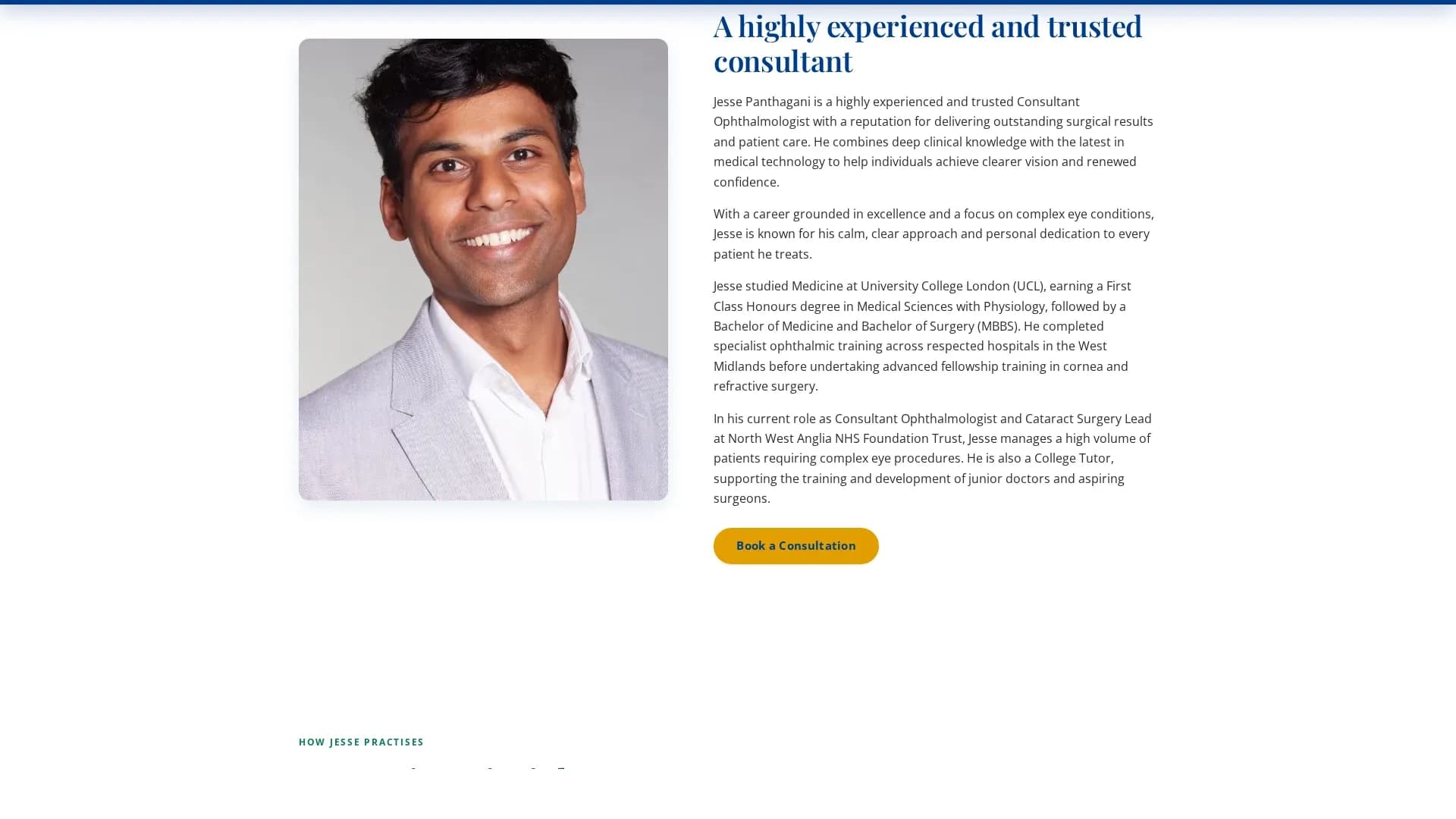
Mr Jesse Panthagani is a consultant ophthalmologist and Cataract Surgery Lead at North West Anglia NHS Foundation Trust — a UCL first, a cornea and refractive fellowship, and a College Tutor’s job training the surgeons coming up behind him.
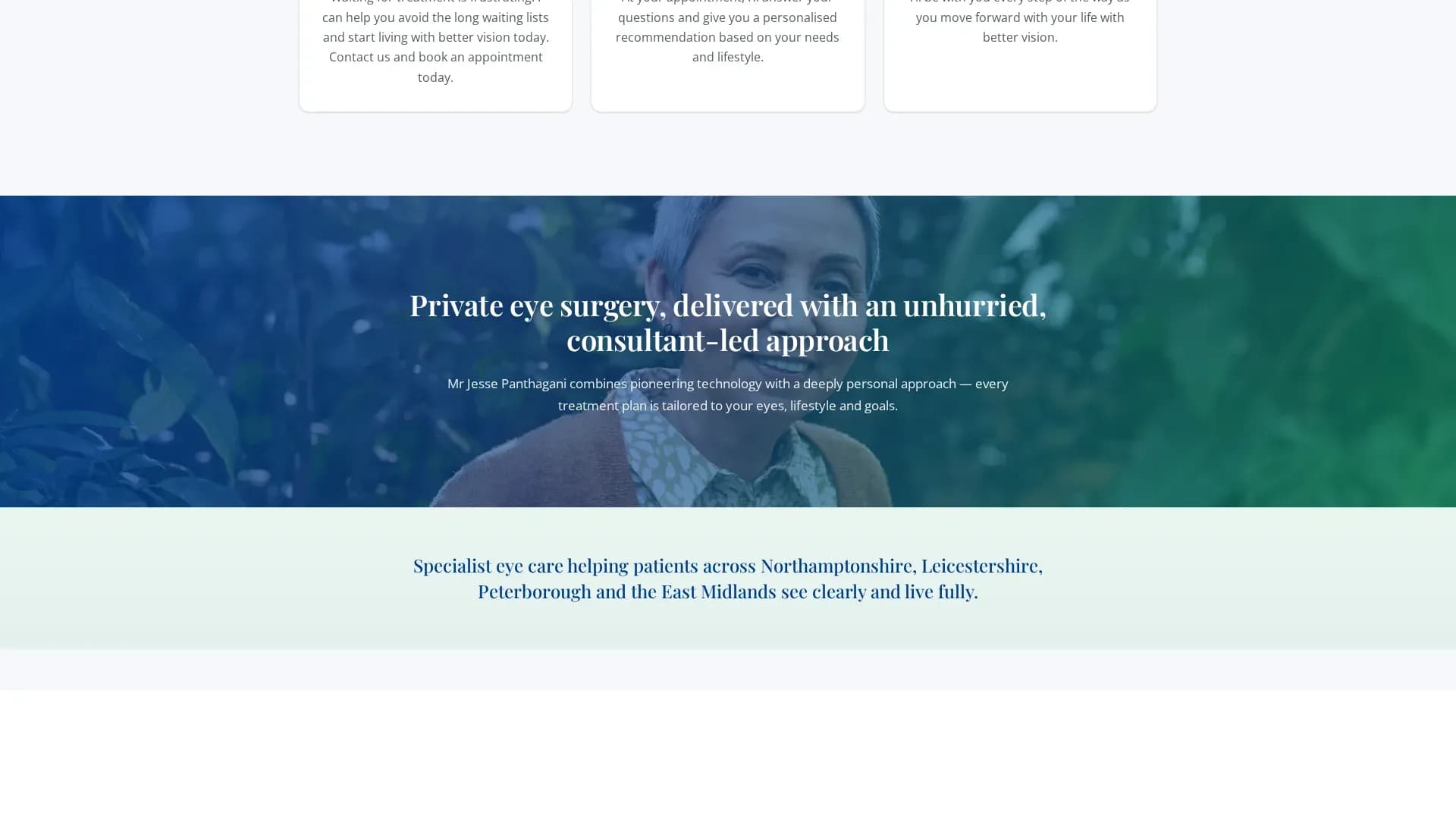
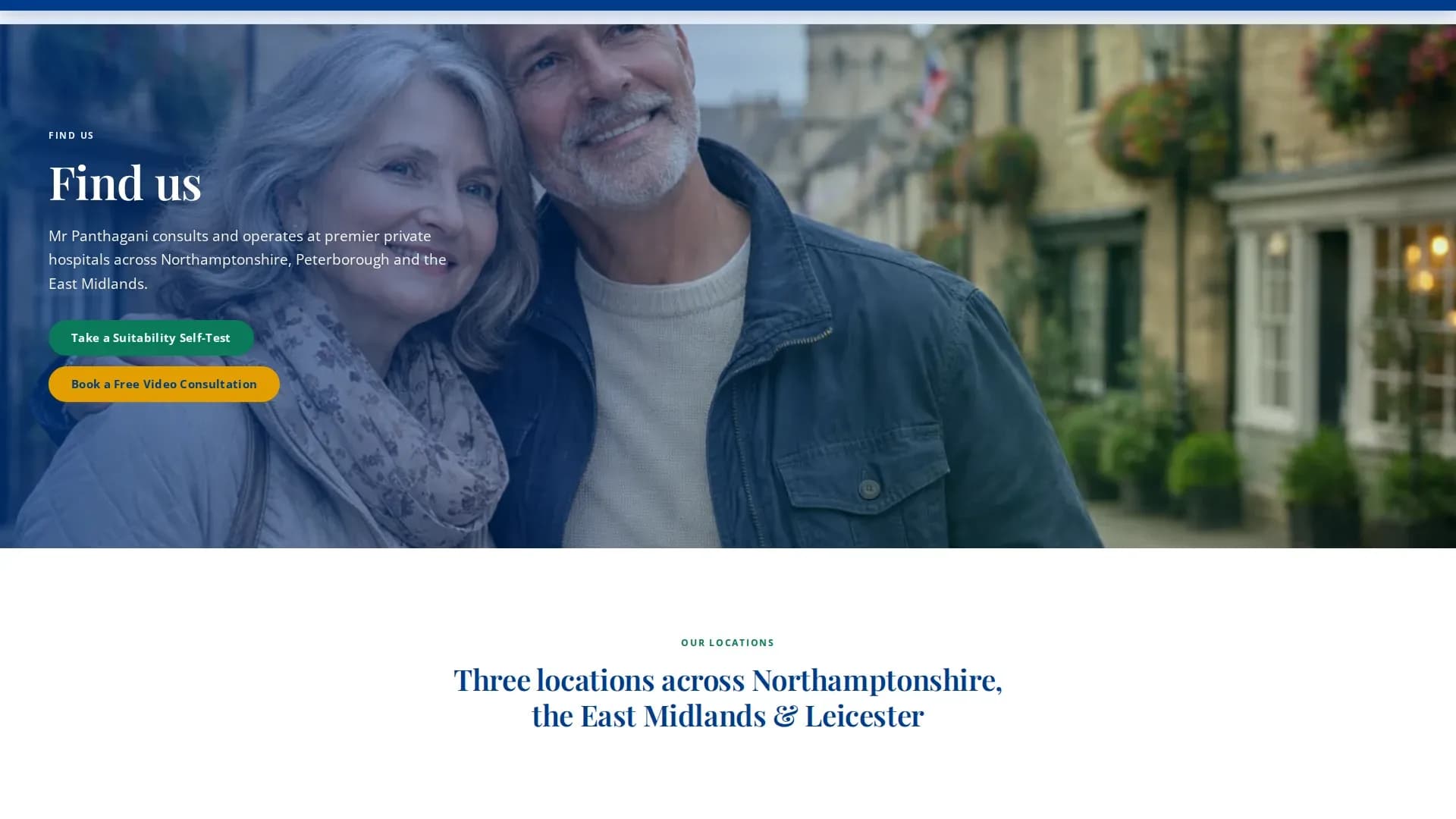
His private practice at panthagani.com serves patients across Northamptonshire, Leicestershire, Peterborough and the wider East Midlands, most of whom are weighing a decision they will make exactly once. The old site described the surgery. It gave nobody a way to work out whether they should have it.
Qualifying the patient before the consultation
Private eye surgery has an awkward asymmetry: the surgeon knows within minutes whether someone is a candidate, and the patient has usually spent weeks not knowing. Most practice websites resolve that with a contact form, which puts the least informed person in the room in charge of the first move.
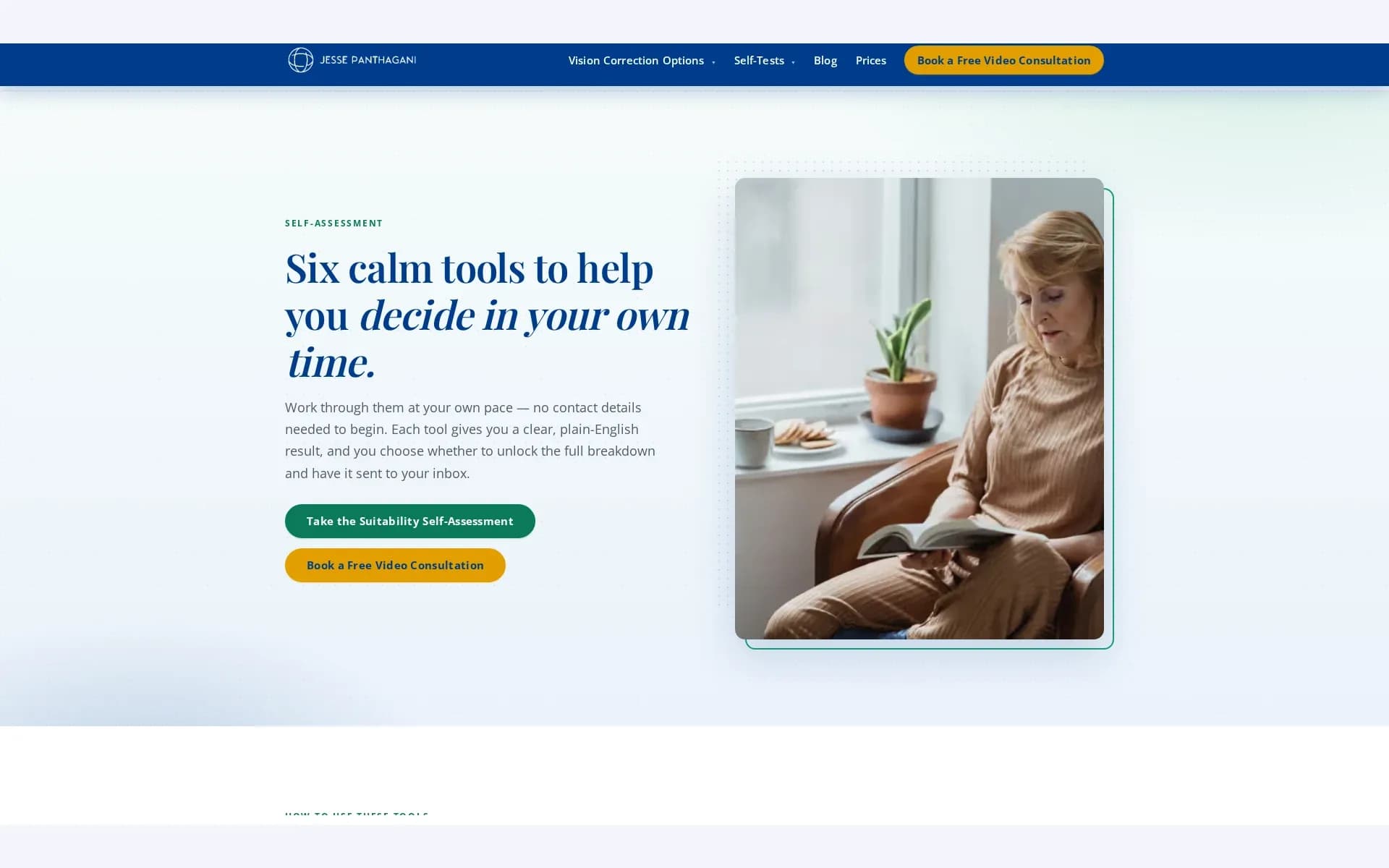
We built this one the other way round. Six self-assessment tools let someone establish suitability, timing, lens preference and what recovery will actually involve — before they speak to anyone. It reflects a principle Mr Panthagani states plainly on his own site: not everyone benefits from surgery, and saying so is part of the job.
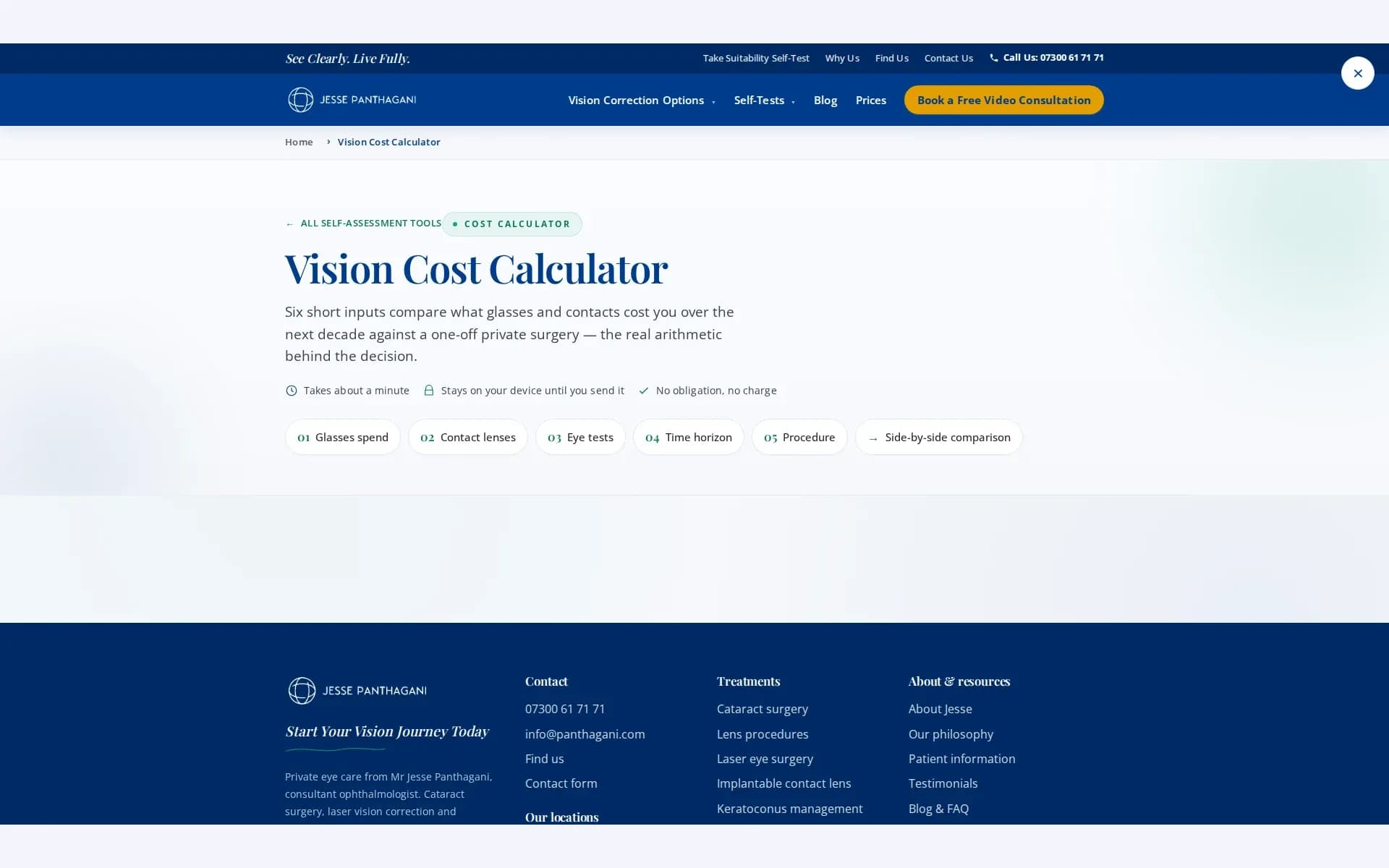
Doing the arithmetic patients are too polite to ask about
Almost everyone assumes private surgery is the expensive option. Often it is. Just as often it is not — not against thirty years of replacement glasses, monthly contact lenses and annual eye tests.
The cost calculator takes six short inputs and returns the ten, twenty or thirty-year comparison in pounds, itemised, with the figures staying on the patient’s own device until they choose to send them. It is explicitly indicative, and it says so.
From the word you were given to the operation that fixes it
Patients almost never arrive looking for a procedure. They arrive holding a word somebody said to them in a consulting room — keratoconus, pterygium, posterior capsule opacification — and no sense of what it means or what follows.
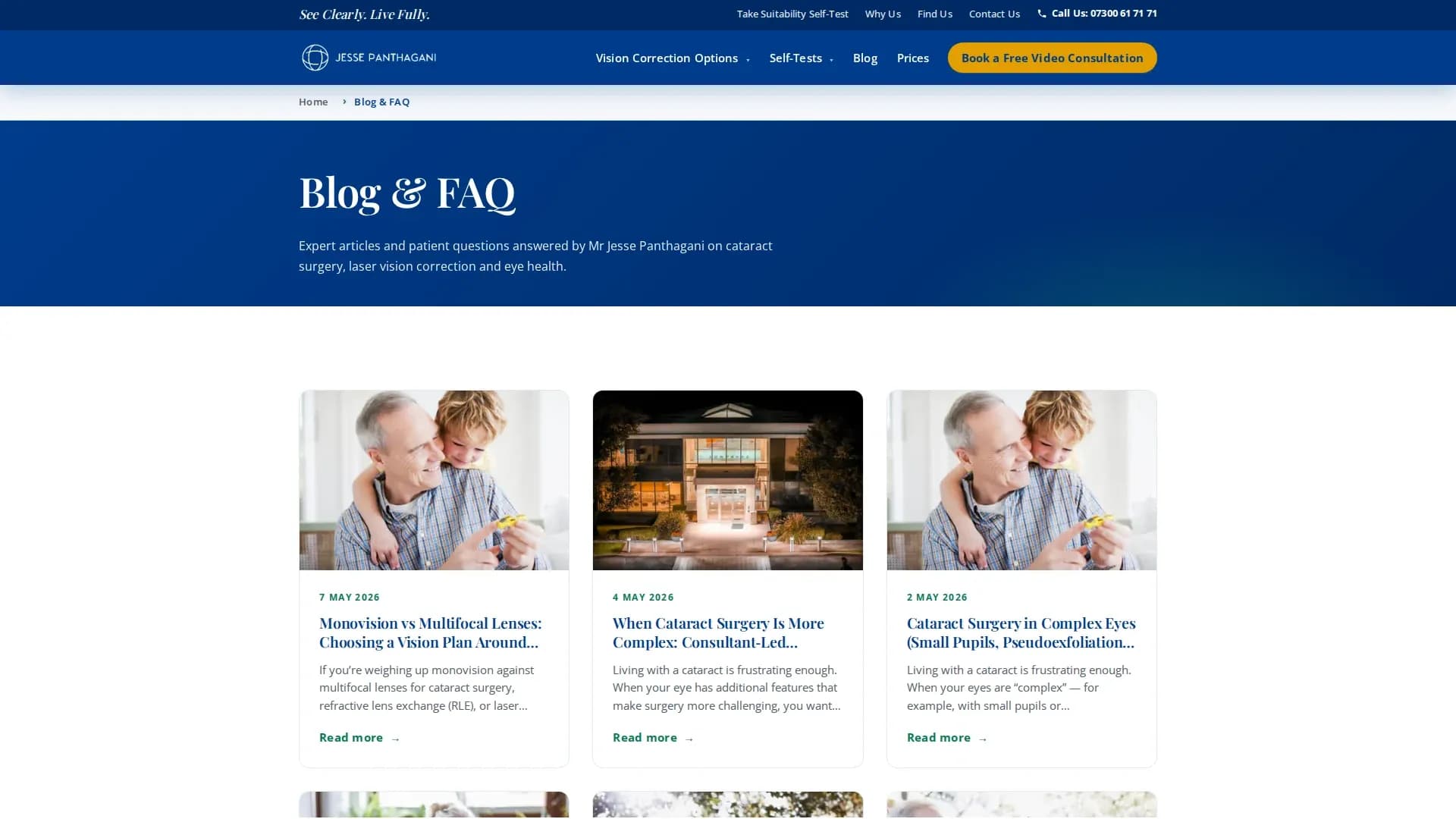
So every condition explains itself in plain language and then hands off to the treatment that resolves it, with 104 articles and FAQs behind them for the questions that surface at two in the morning.
Four principles, printed where patients can hold him to them
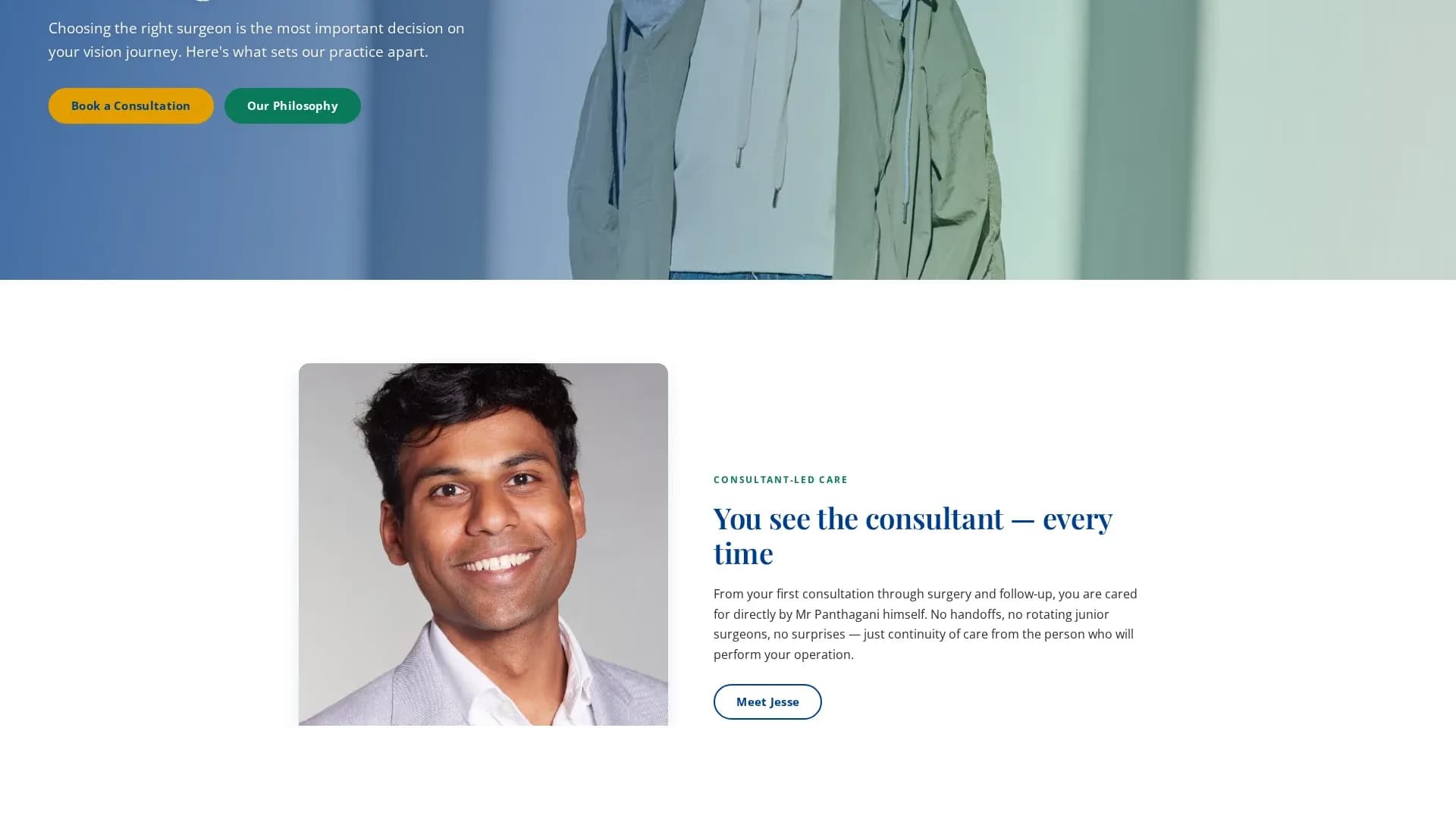
Every journey consultant-led, with the same surgeon from first call to final review. Evidence over enthusiasm, rather than whichever lens a vendor is promoting this quarter. Say no when no is right. And keep teaching, because it keeps the craft sharp.
Publishing that on a commercial website is a slightly risky thing to do — it is a list of ways to be found wanting. It is also the most persuasive page on the site.
“Not everyone benefits from surgery. If your eye will do better with glasses, contacts or watchful waiting, that’s what we’ll do.”
Where the practice is now
The practice runs 141 pages: six conditions, three treatment routes, six self-assessment tools, a cost calculator, published prices, a referral route for optometrists and a 104-piece article library — with a free video consultation as the first step rather than a booked appointment.
A patient can now arrive at that first call already knowing roughly what they need, what it costs and whether it is even the right time.
“A holistic digital reinvention that converts visitors into patients. Aethus exceeded our expectations.”
Ready when you are
See what Google could do for your practice
Send us your practice website. We will look at how patients find you today and reply within one working day with an honest view of what would move the needle: no obligation, no hard sell.
- Built by the team behind all three ophthalmology case studies
- Website design, medical SEO and marketing under one roof
- Fixed-price quote before any work starts
More on ophthalmology website design and ophthalmology SEO.
Get a free review of your practice website
Tell us where to send it. We reply within one working day.