ZWIP
An AI voice examiner in every candidate’s pocket

- Client
- ZWIP
- Industry
- education
- Challenge
- PLAB 2 success comes down to hours of realistic, spoken clinical practice — but reps are expensive and scarce. Study partners are hard to find, courses cost thousands, and feedback is subjective and rarely mapped to the GMC domains that actually score. International graduates, often new to the UK, are the least served and the most anxious.
- Key Results
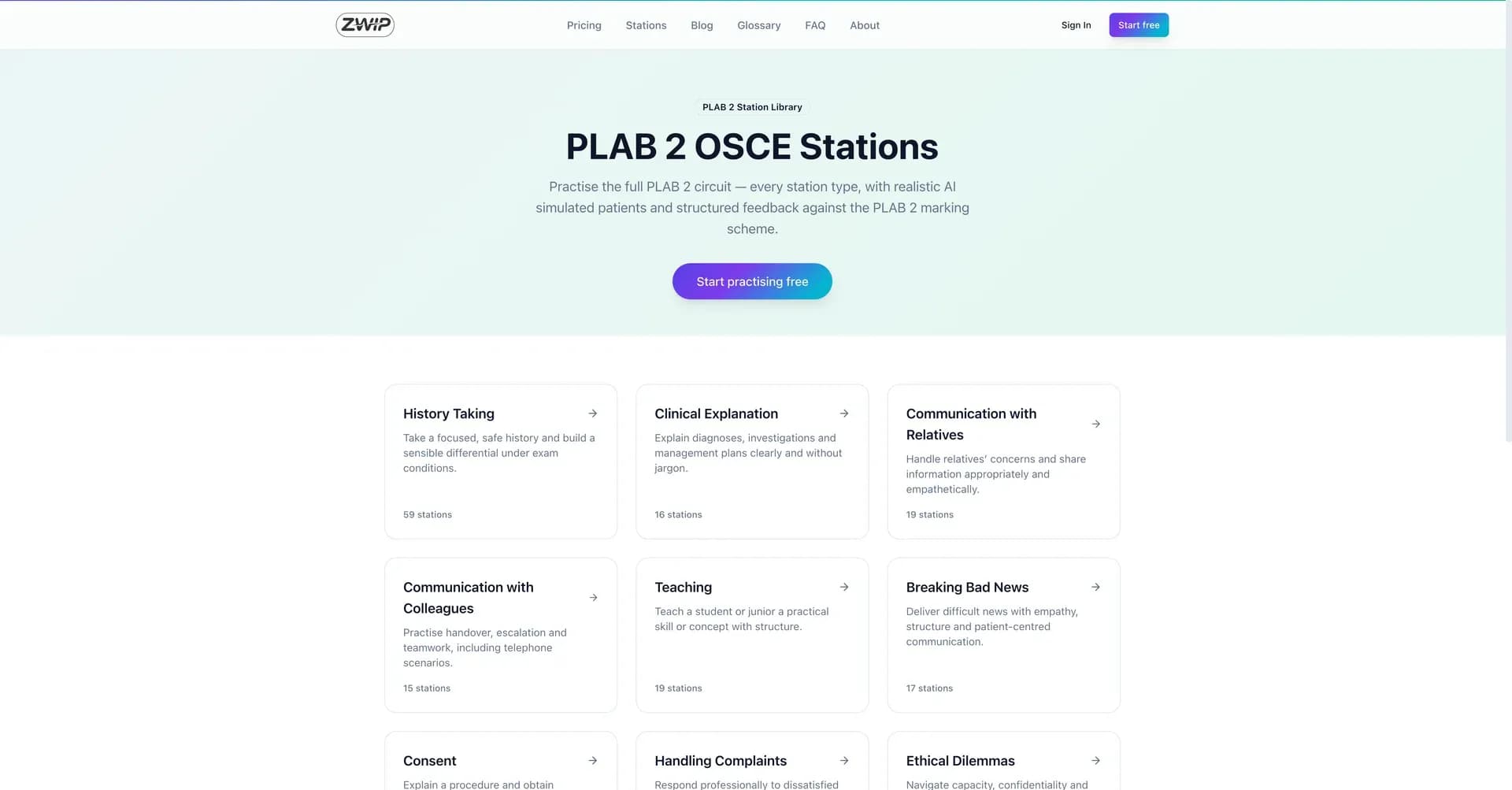
- 9 PLAB 2 station types, 3 GMC domains scored
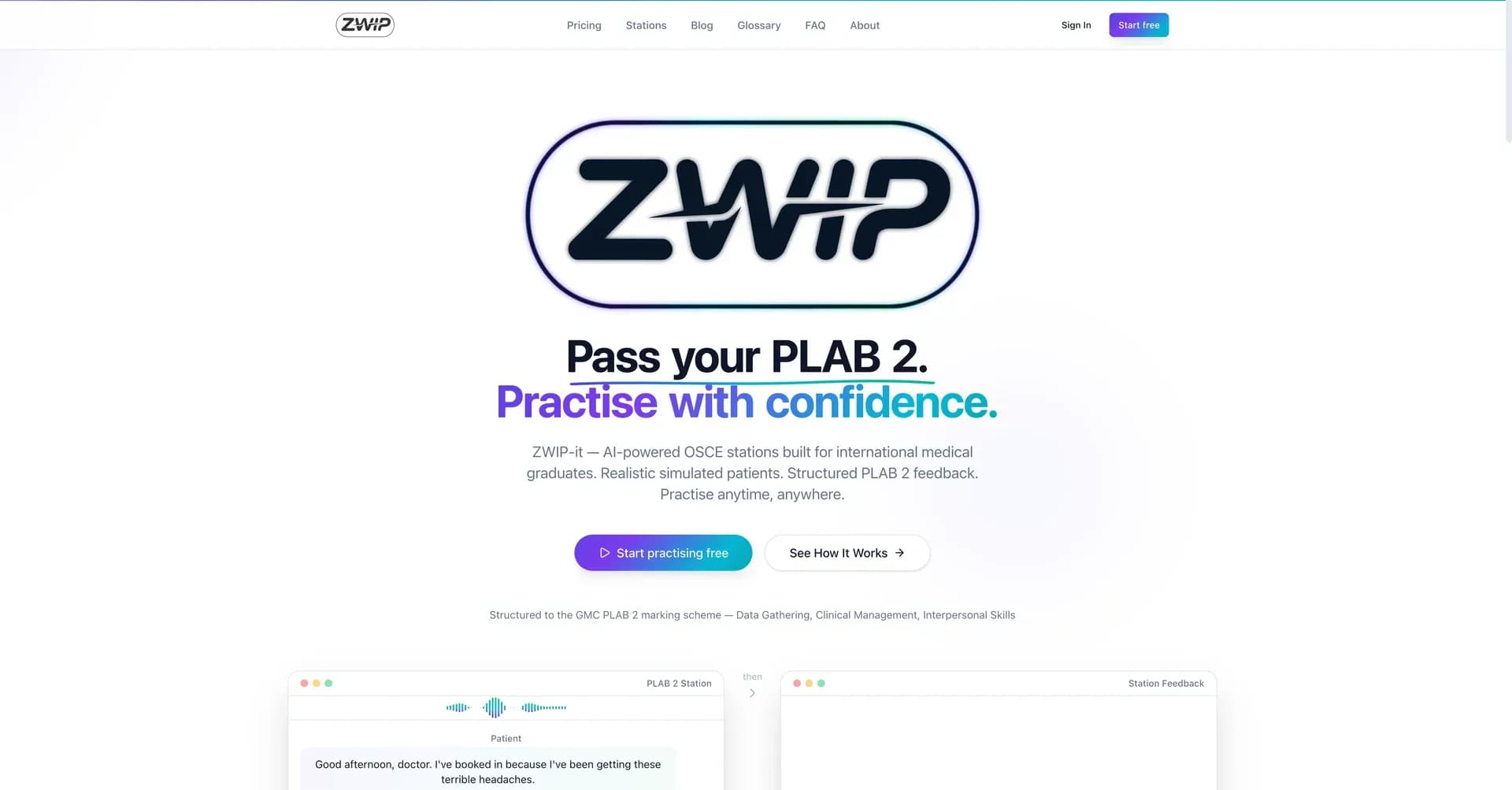
ZWIP is an AI-powered PLAB 2 OSCE simulator that lets international medical graduates rehearse realistic, voice-based clinical consultations with AI simulated patients — and get instant feedback aligned to GMC marking criteria. Aethus designed and built the product end-to-end: brand, UX, the real-time voice-AI engine, the GMC-aligned scoring model and the web presence.
The Challenge
PLAB 2 success comes down to hours of realistic, spoken clinical practice — but reps are expensive and scarce. Study partners are hard to find, courses cost thousands, and feedback is subjective and rarely mapped to the GMC domains that actually score. International graduates, often new to the UK, are the least served and the most anxious.
Our Solution
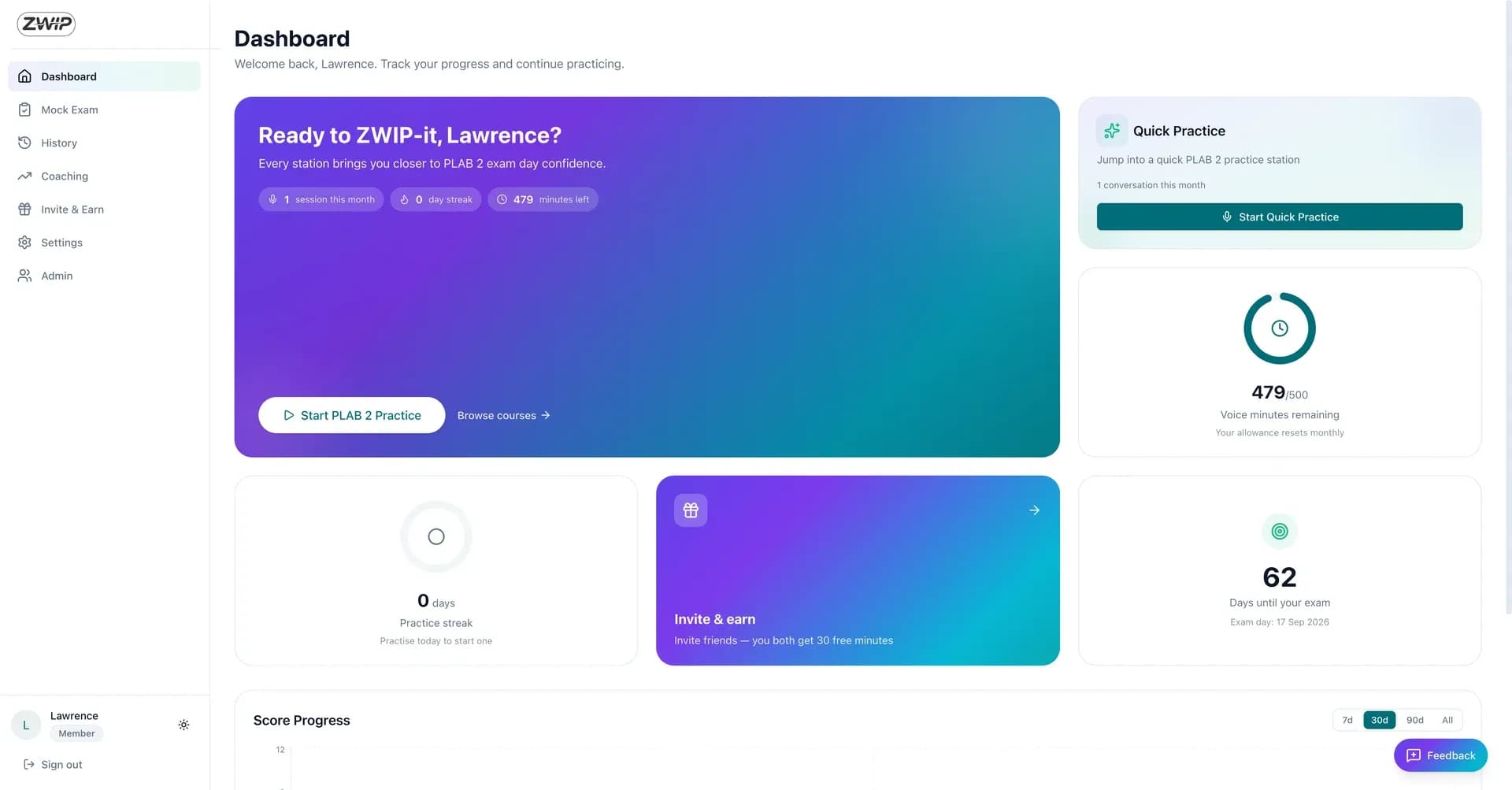
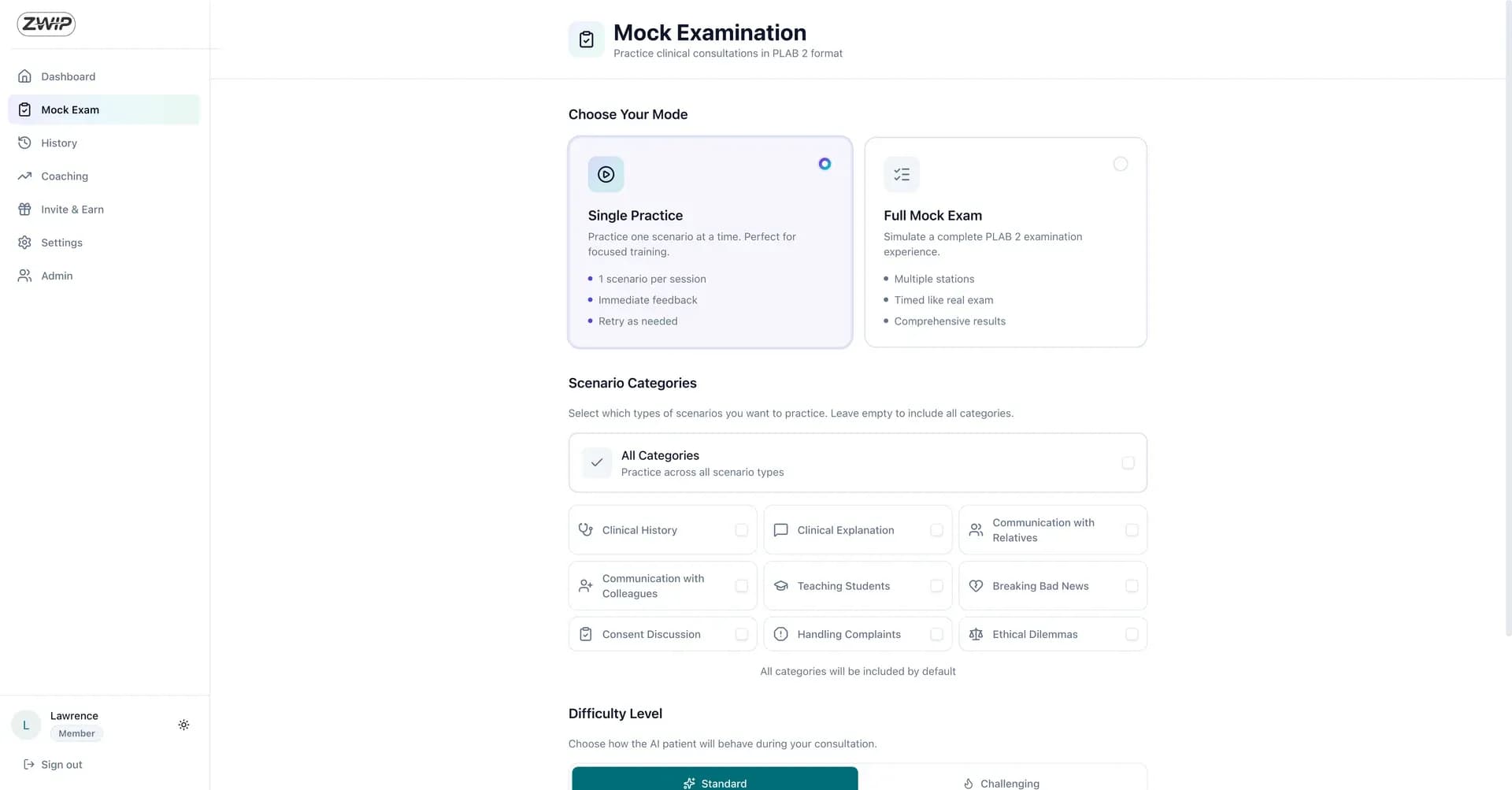
A voice-first AI OSCE simulator. Candidates practise unlimited spoken consultations with clinically accurate AI patients across 9 station types, then receive structured scoring across the three GMC domains — Data Gathering, Clinical Management and Interpersonal Skills — plus a progress dashboard and exam countdown. Aethus delivered the whole product: strategy, brand, design, the real-time voice-AI engineering, scoring and the marketing site.
The brief
Passing PLAB 2 is the gateway for international medical graduates to practise in the UK — and it is ruthlessly practical. Candidates face a circuit of live OSCE stations: short, timed clinical scenarios with a simulated patient, marked against strict GMC criteria. The single biggest predictor of success is reps — hours of realistic, spoken practice with honest feedback.
The problem is that reps are expensive and hard to come by. Study partners are scarce, courses cost thousands, and feedback is subjective and inconsistent. ZWIP set out to fix that — and asked Aethus to design and build the entire product, from the voice engine to the brand.

How it works
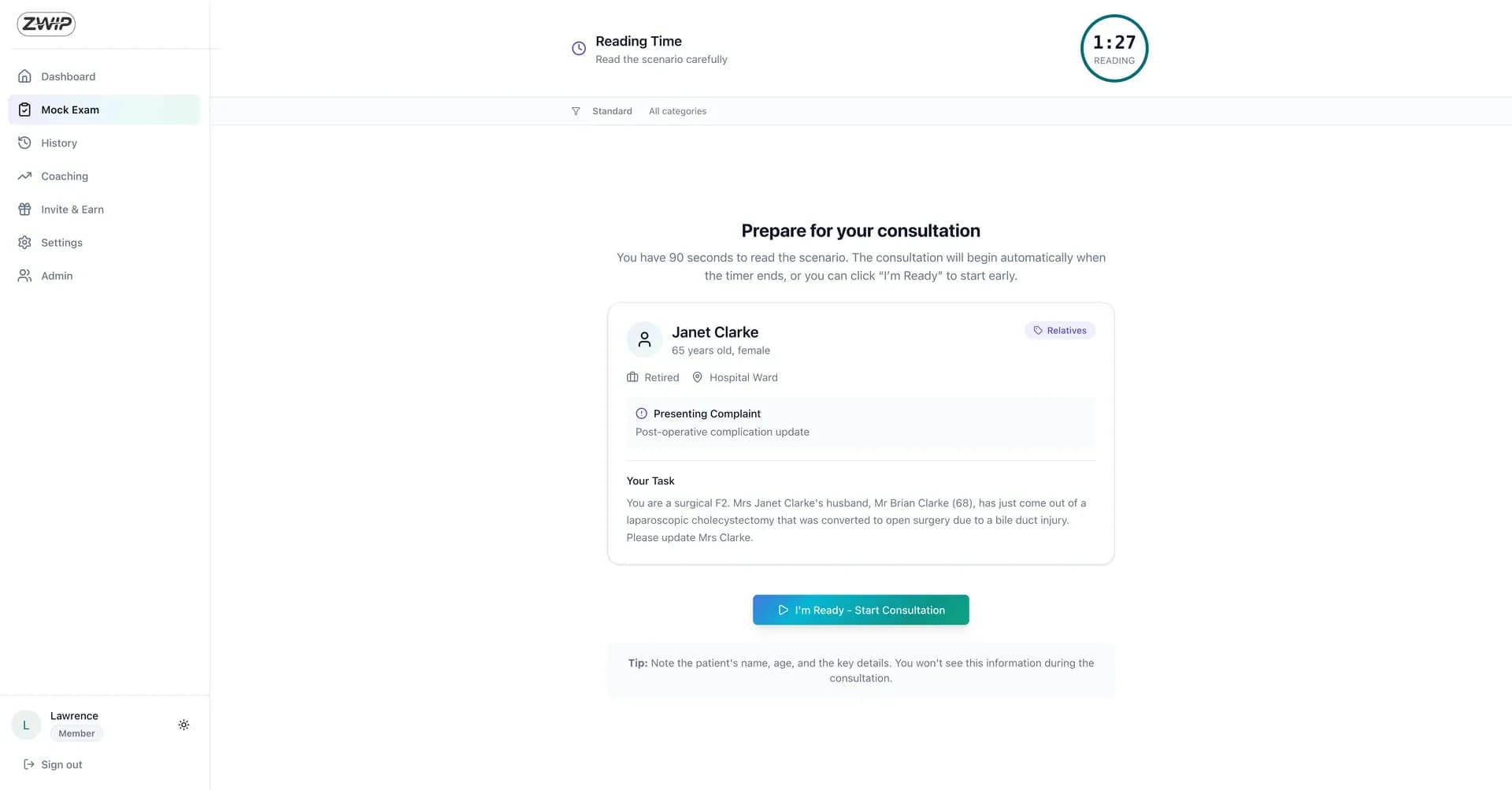
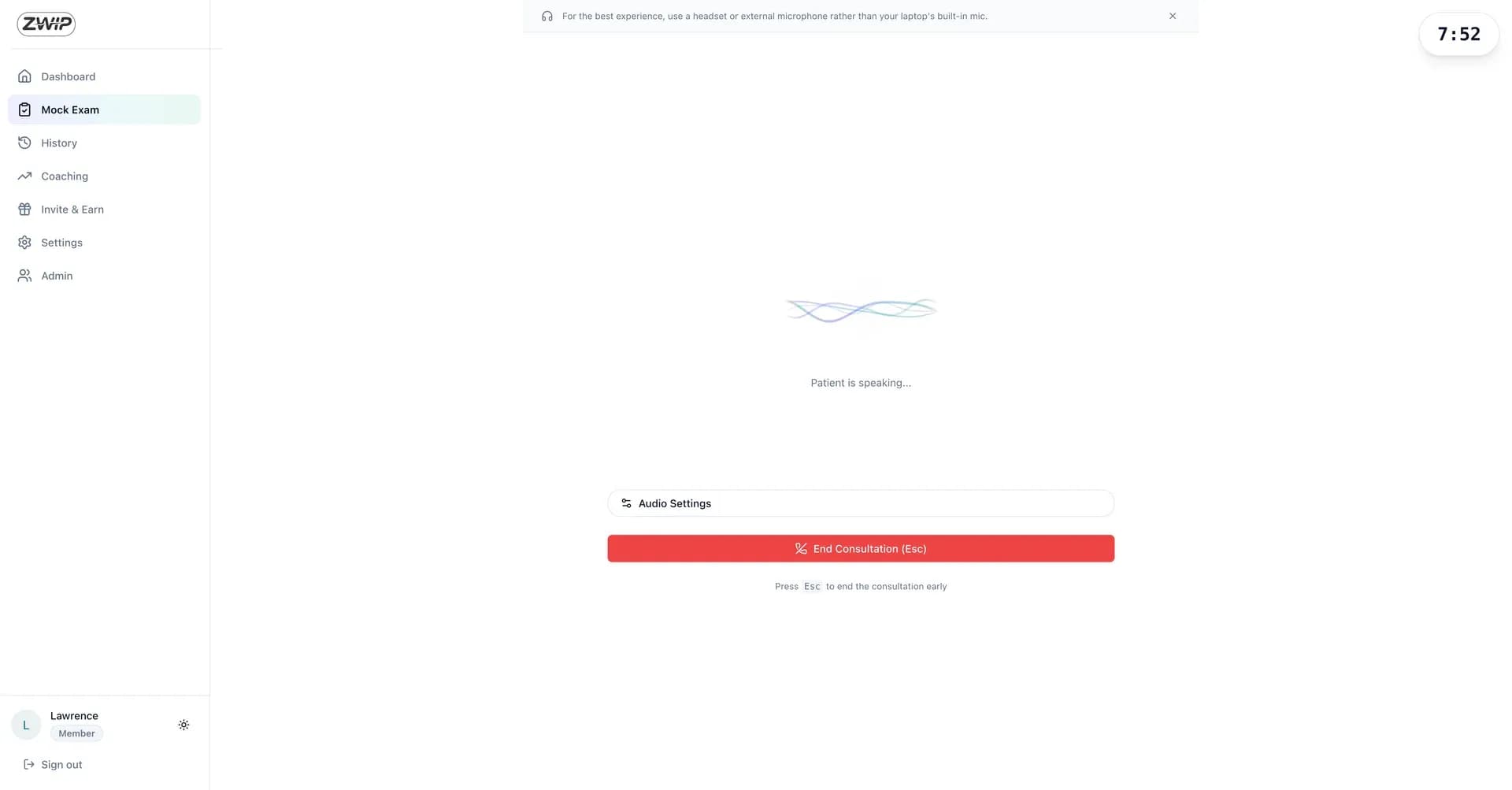
ZWIP turns any laptop into a private OSCE circuit. A candidate picks a station, reads a short scenario brief, and then speaks — out loud — to a voice-first AI patient that responds naturally, answers questions, shows emotion, and follows a clinically accurate script that adapts to how the consultation is led.
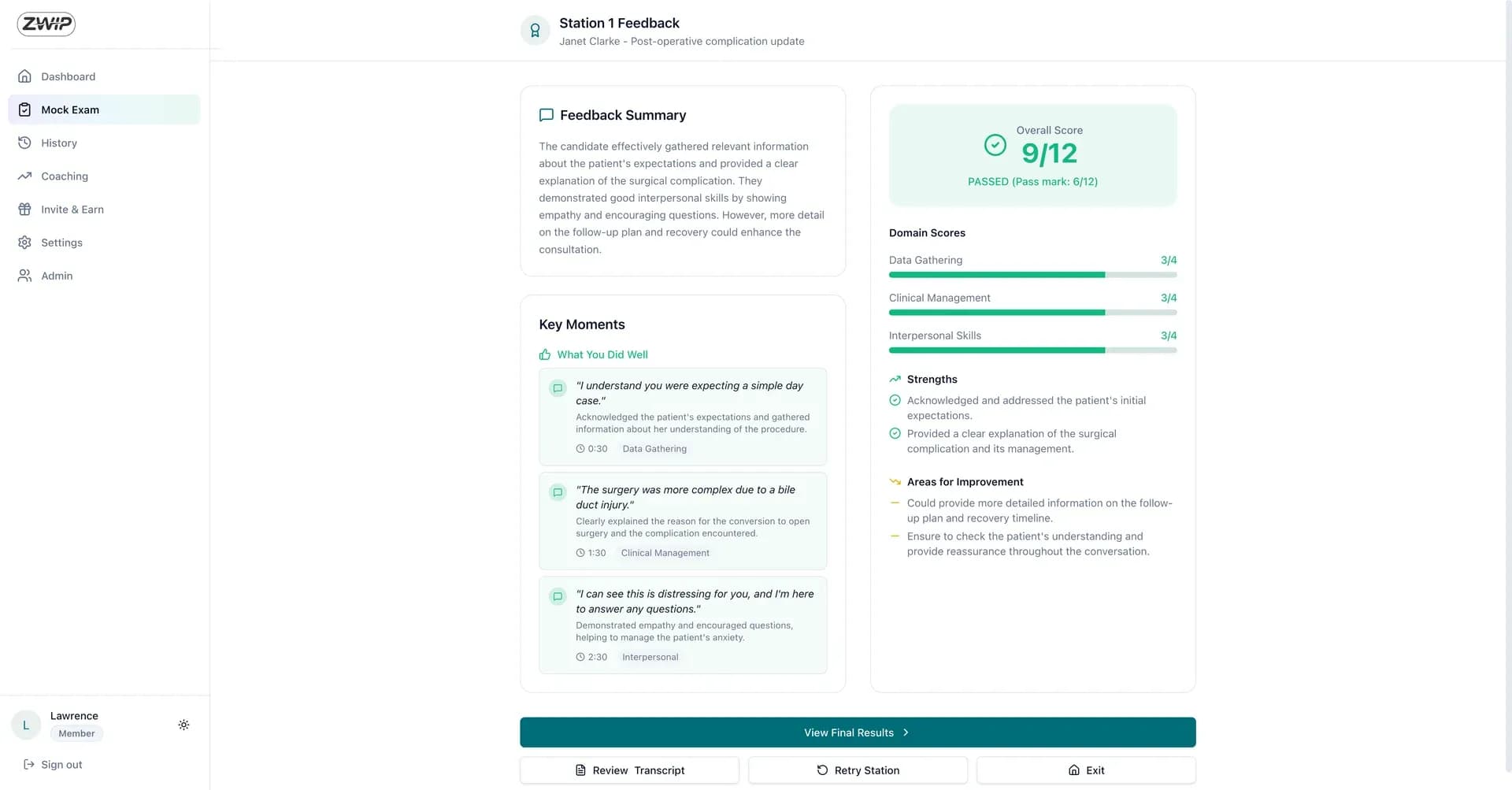
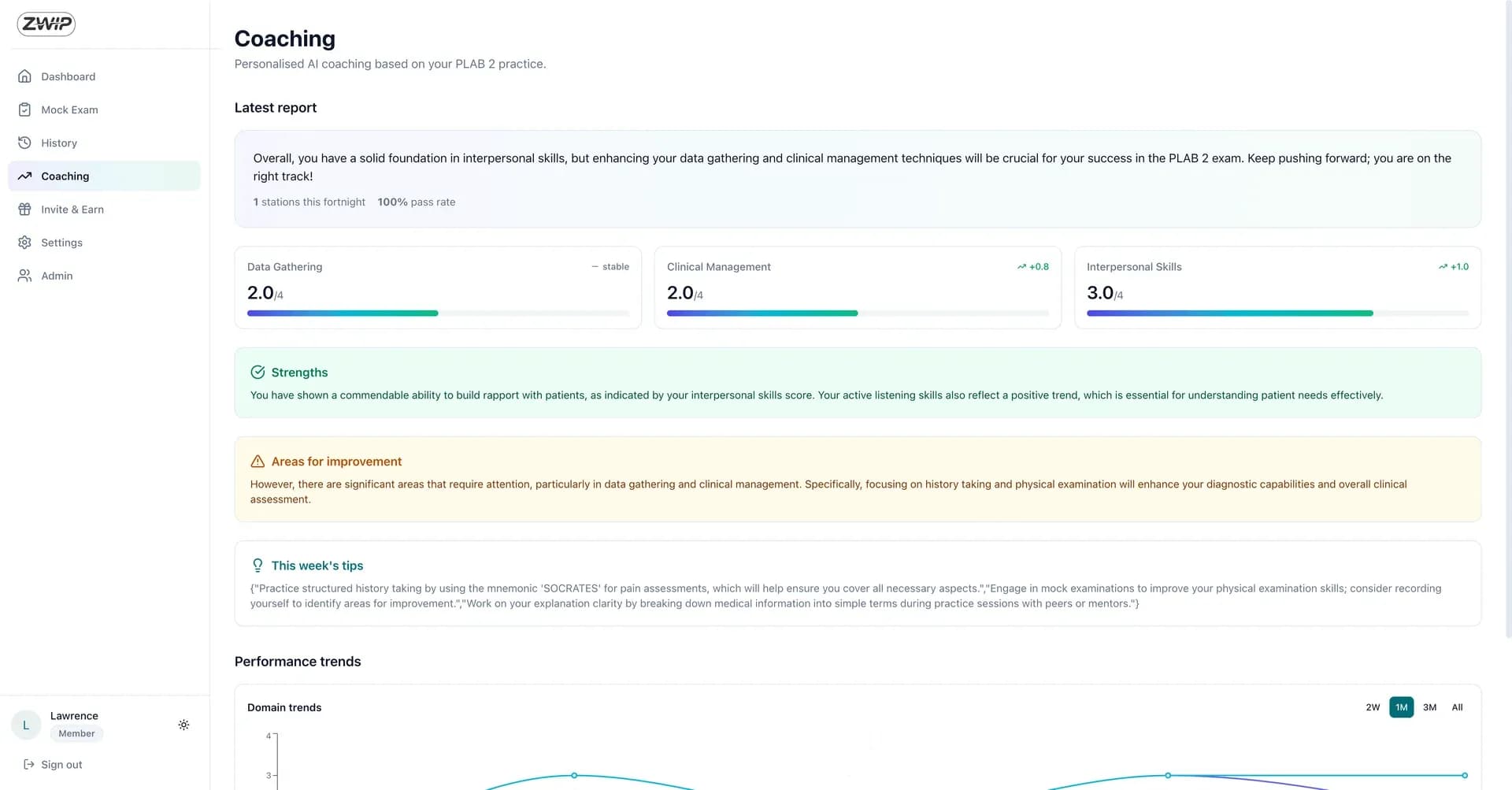
When the station ends, ZWIP scores the encounter across the three domains real examiners use — Data Gathering, Clinical Management, and Interpersonal Skills — and returns specific, actionable feedback. No partner, no scheduling, no travel.
Engineering a patient that feels real
The hardest part of a voice-first product is latency. A patient that pauses for three seconds breaks the illusion instantly. We built a streaming voice pipeline — speech-to-text, a clinically-grounded dialogue model, and text-to-speech — tuned so replies begin the moment the candidate stops speaking.
Every patient is driven by a structured clinical persona — name, age, history, presenting complaint and hidden concerns — so the AI stays medically accurate and on-scenario while still improvising natural, conversational responses.

Scoring the way examiners do
Feedback is only useful if it mirrors the real mark scheme. ZWIP evaluates every consultation against the same three GMC domains examiners apply, scores each out of four for a total out of twelve against a clear pass mark, then translates that into concrete guidance — what was missed in the history, where management could be safer, how to communicate with more warmth and clarity.
It even surfaces key moments from the transcript, quoting exactly what the candidate said and why it worked — turning every attempt into a targeted coaching session.


A brand that earns clinical trust
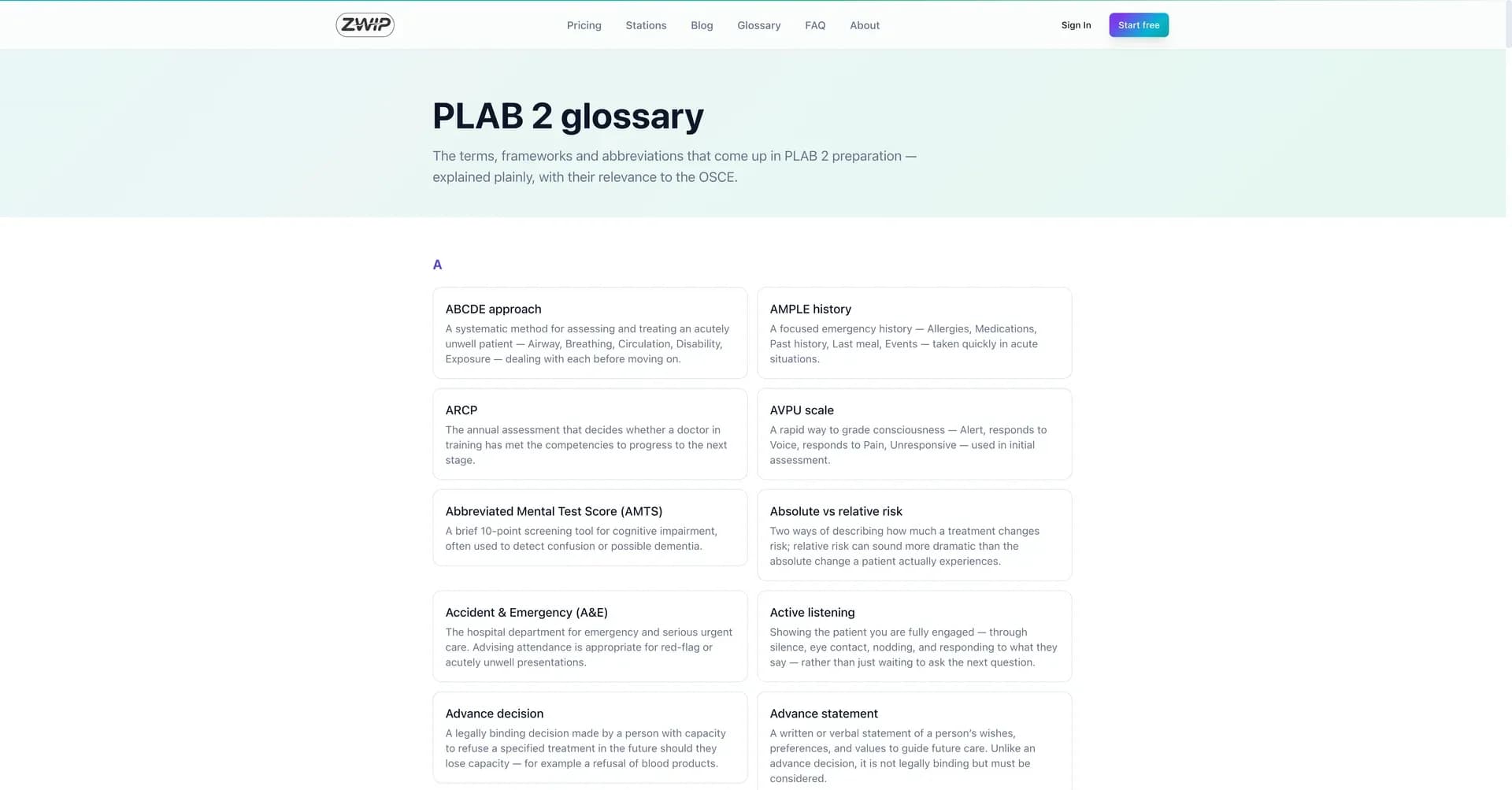
Medical candidates are discerning and stressed. The identity had to feel calm, credible and modern — clinical enough to be trusted, human enough to be reassuring. We built the name, the audio-waveform logomark, the gradient colour system, typography and a full UI kit as one coherent system across product and web, with light and dark modes throughout.
“Every candidate deserves a patient who never gets tired, never judges, and is available at 3am the night before the exam.”
The shift we enabled
ZWIP launched as a complete, self-serve product: candidates sign up, start a free station with no card required, and practise unlimited spoken consultations with instant, examiner-style feedback — for a fraction of the cost of a single coaching session.
The roadmap already extends the same engine to MRCP (PACES), MRCS (OSCE) and MRCGP (CSA) — turning ZWIP from a PLAB 2 tool into a platform for clinical exam preparation.
“ZWIP gave me a way to practise real consultations out loud, on my own schedule, and actually understand where I was losing marks. It changed how I prepared for PLAB 2.”
Related Projects
How Does Your Website Score?
Get a free AI-powered audit of your website in under 60 seconds.
Try the Free Website AuditHow Digitally Ready Is Your Business?
Take our 2-minute quiz and get a personalised AI action plan for your digital growth.
Take the Free QuizWant Results Like 9 PLAB 2 station types?
We helped ZWIP achieve measurable growth. Book a free consultation to discuss how we can do the same for your education.